It is one of the most common questions we hear in the showroom: should I put in real hardwood or luxury vinyl plank? Both can look wonderful, and both can be the right answer. The better choice depends on the age and layout of your home, how you use each room, and what you want from the floor ten or twenty years from now.
Our family has installed both for generations in Western New York homes, from Buffalo doubles and Kenmore bungalows to newer builds in Clarence and Lancaster. Here is how we help people think it through.
How They Are Made, and Why It Matters
Hardwood comes in two forms. Solid planks are cut from a single piece of wood and are the traditional choice. Engineered hardwood has a real wood surface layer over a layered core, which makes it more stable when humidity changes and allows it to be installed in more places, including some below-grade rooms depending on the product and the moisture situation.
Luxury vinyl plank is a multi-layer synthetic floor. A printed image layer is protected by a clear wear layer, and the core is rigid or flexible depending on the product. Because it is not made from wood, water does not swell it. That one fact explains most of its popularity in our area.
Looks and Feel
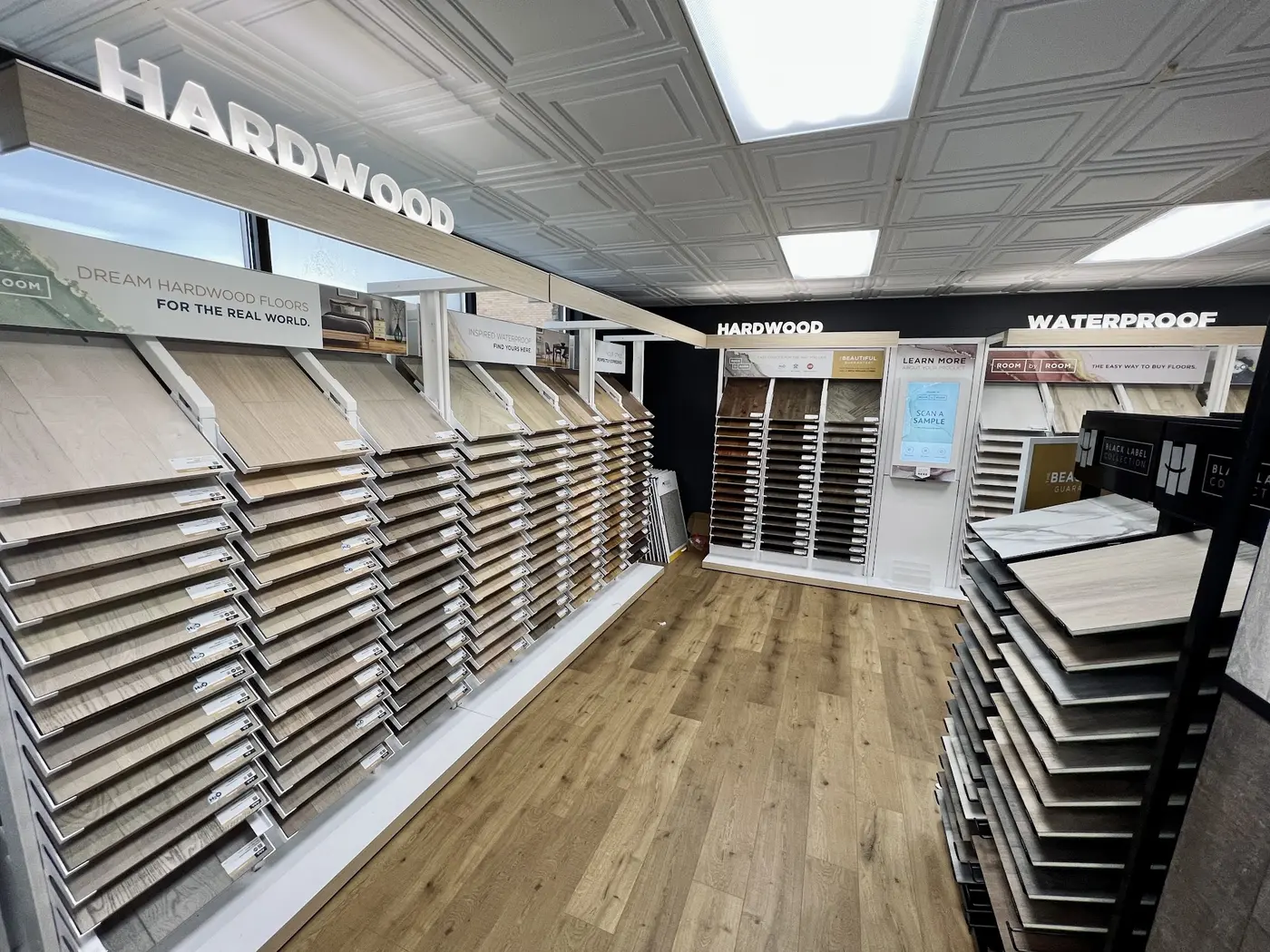
Real wood has variation that is hard to copy: grain, knots, depth, and the way it changes color with light and age. Walk across a good hardwood floor and it feels solid. Vinyl has come a long way, and today's best products have convincing texture and realistic variation, so in many rooms visitors cannot tell the difference. Still, if you love the character of real wood, nothing replaces it.
Durability and Daily Life
Hardwood can scratch and dent, particularly with dogs, heavy furniture and high heels, and standing water can damage it. On the plus side, its wear surface is thick enough to be sanded and refinished, so a floor that looks rough after decades of family life can be renewed. See our refinishing page for what that involves.
Luxury vinyl plank resists water, stains and most everyday scuffs, and it is a calm choice for busy households. Its limit is that the wear layer cannot be sanded away. If it is badly gouged, individual planks can sometimes be replaced, but there is no refresh option in the way there is for wood. Quality varies a great deal between products, which is one reason we recommend choosing from real samples rather than from a photo.
Cost: A Realistic Range for 2026
Prices change with product, room shape and prep, so these are general installed ranges for Western New York and not a quote. We cover pricing in more depth in our guide to what new flooring costs.
| Hardwood (solid or engineered) | Luxury vinyl plank | |
|---|---|---|
| Typical installed range per sq ft | $8 to $15 | $5 to $11 |
| Moisture tolerance | Moderate, varies by product | High |
| Can be refinished | Yes, usually more than once | No |
| Typical feel underfoot | Firm, warm | Slightly softer, quieter |
| Best rooms | Living, dining, bedrooms, halls | Basements, kitchens, baths, mudrooms |
Remember that prep work can shift these numbers. Leveling an older subfloor, removing the old carpet, or handling stairs adds labor, and our team explains each line before the work begins.
The Local Factors That Tip the Decision
Older homes
In 1920s to 1960s houses, there is often original hardwood under carpet. If it is in decent shape, restoring it can be more rewarding than covering it with something new. If the subfloor is uneven or the boards are beyond saving, a new floor makes sense, and both options are on the table.
Basements and moisture
Below-grade rooms in our region can be damp, especially in spring thaw. We lean toward luxury vinyl plank or tile there. Our basement flooring guide goes deeper into this.
Resale
Buyers still respond well to hardwood on the main floor of a traditional home, while a good-looking vinyl floor is perfectly acceptable in a family room or finished lower level. If you plan to sell within a few years, consider what similar homes in your neighborhood have.
Installation Time and Disruption
Installation time is another real difference. Vinyl plank often goes down faster, and many products float over a properly prepared subfloor, so a room can be back in use quickly. Hardwood, especially site-finished solid wood, takes longer because of acclimation, installation and finishing steps. If you are working around kids, pets or a tight timeline, ask us how long your specific rooms would take, and whether furniture moving and old floor removal are part of the plan.
A Practical Way to Decide
- Choose hardwood if you value the natural look, plan to stay for years, and can keep humidity steady.
- Choose luxury vinyl plank if you have pets, young children, spills, or a damp lower level.
- Mix them if your house calls for it. Wood in the main living space and vinyl in the lower level or mudroom can look seamless when the colors are coordinated.
- Compare actual samples at home, in your own light, before you commit.
If you are in Amherst or elsewhere in the area, our local pages show the services we offer nearby. For an unfiltered view of how our work holds up, see what customers say on the reviews page.
Torn between wood and vinyl? Let us bring both to your home and compare them in your own light.
Schedule an estimate